
The Caravan Serai at Rajmahal, Bihar Art Print
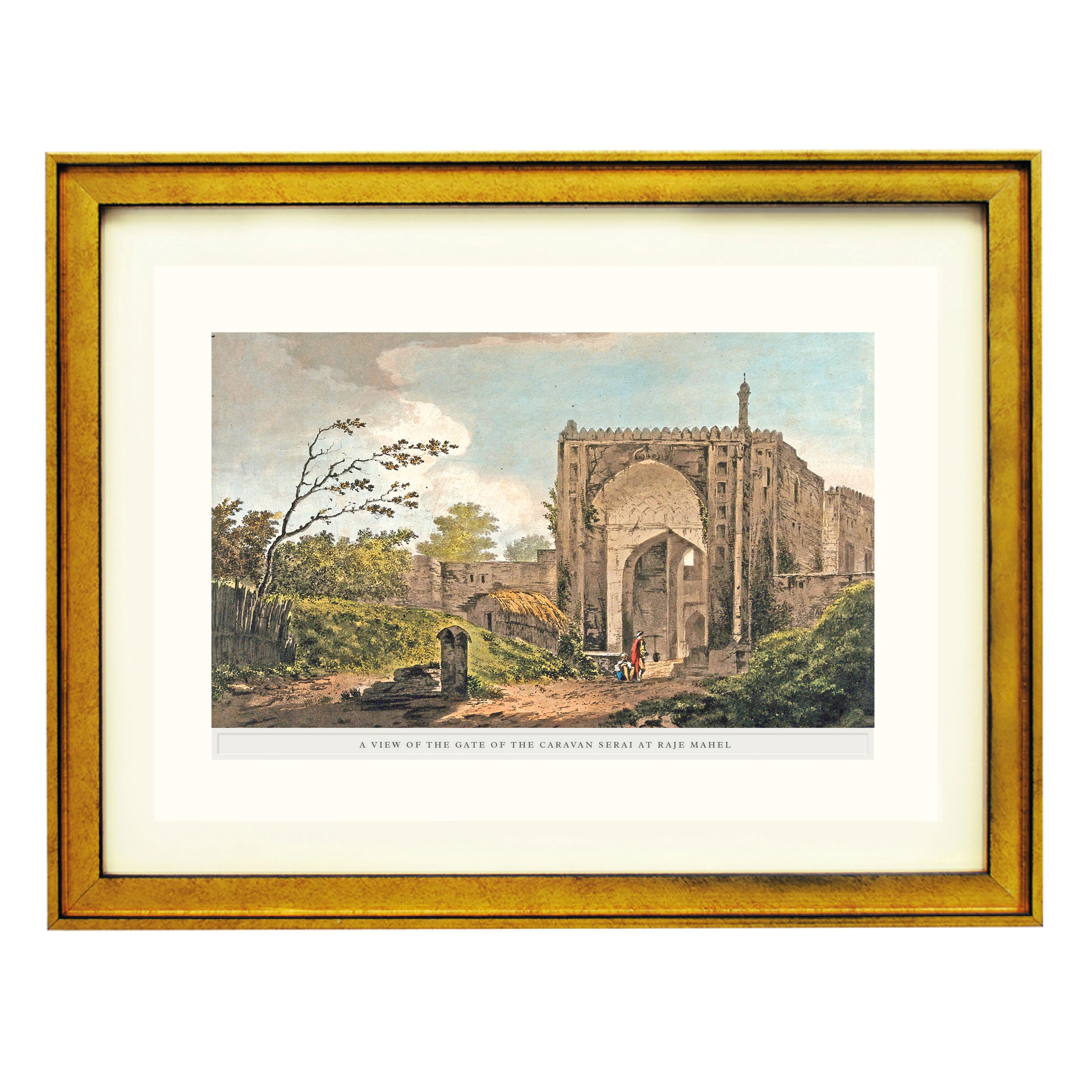
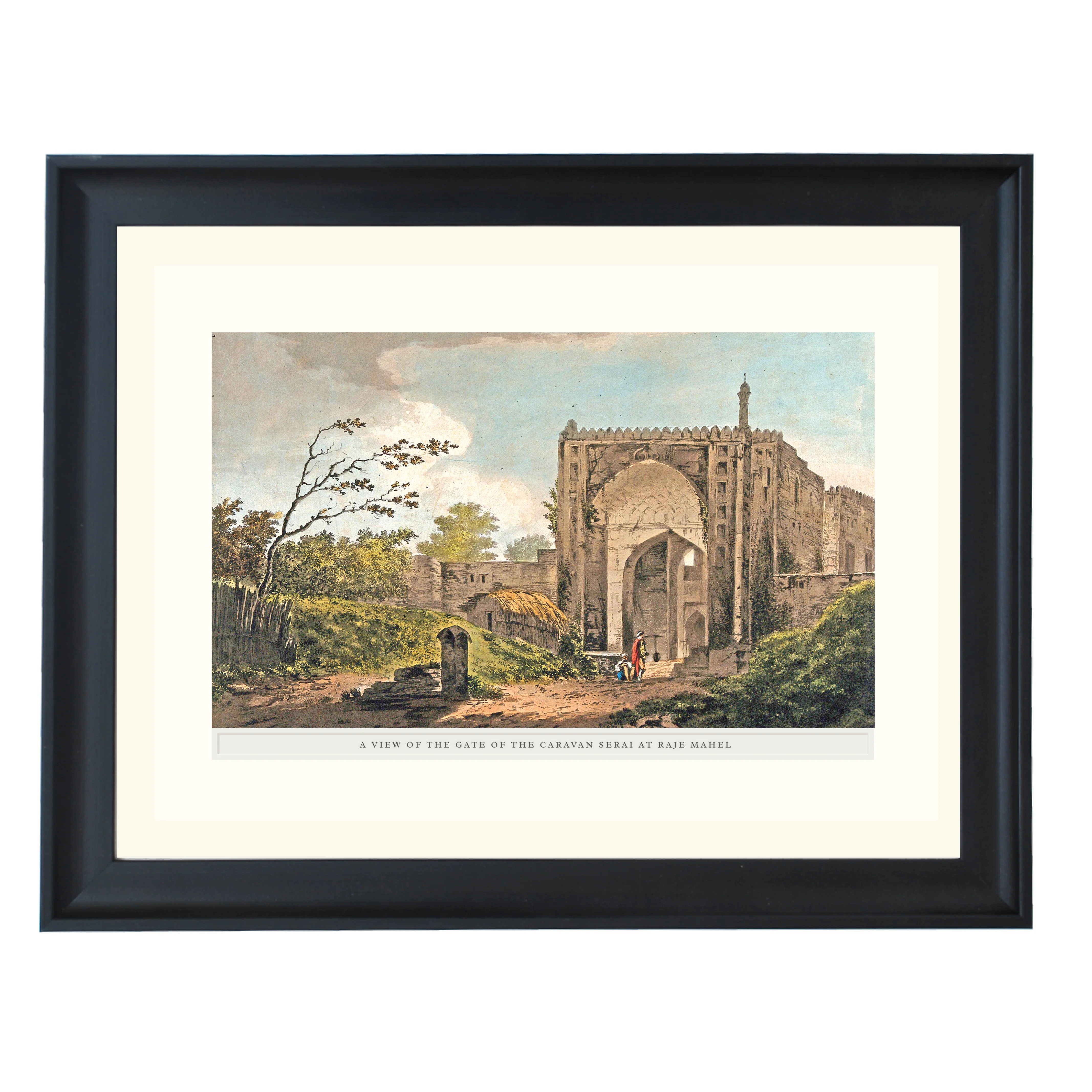
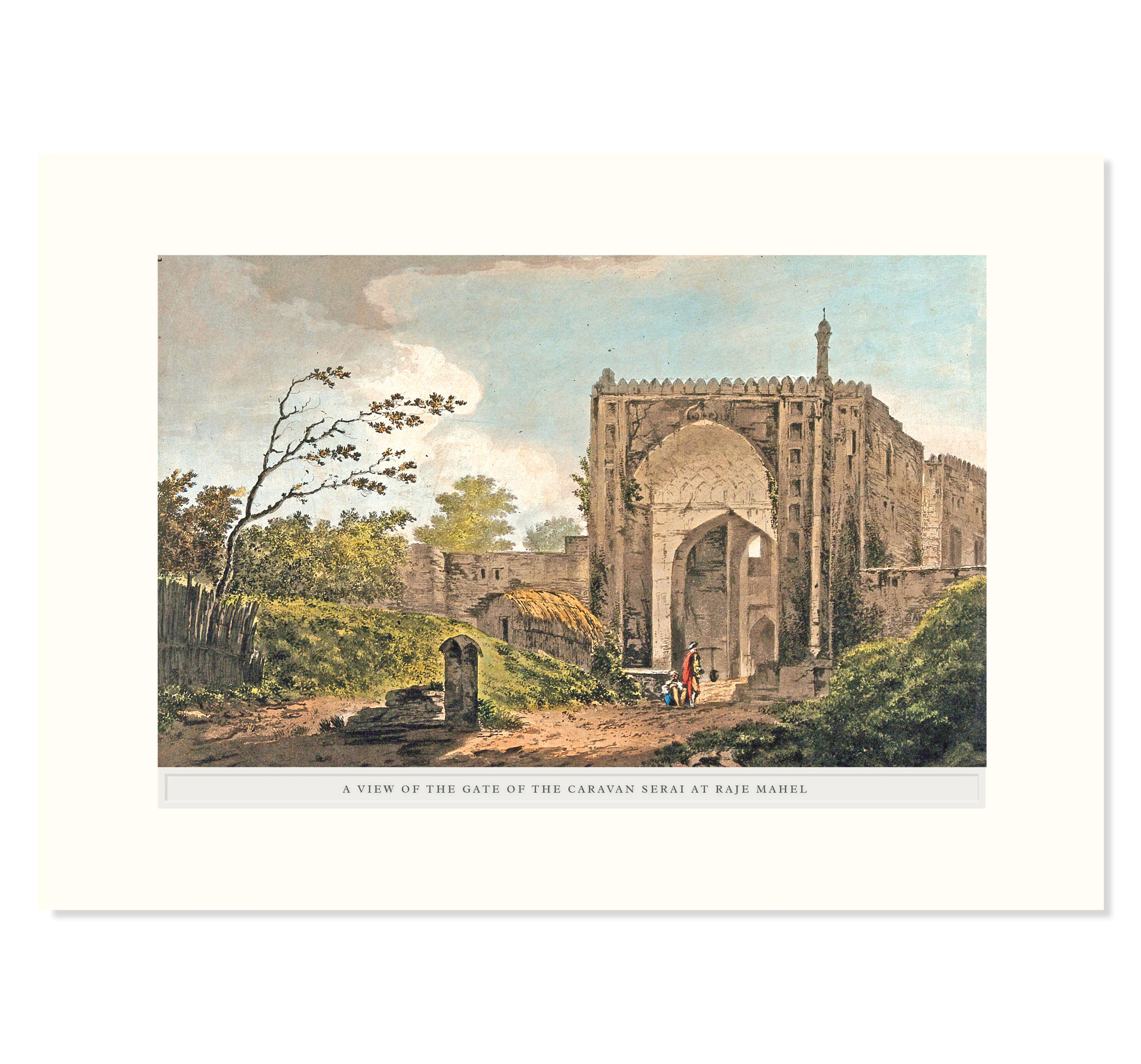
William Hodges' colored etching from 1785 offers a glimpse into the Gateway to the Caravanserai at Rajmahal, Bihar, from William Hodges' book, 'Select Views in India,' presents a captivating depiction of a rest house for caravan travelers at Rajmahal. Hodges, who visited Rajmahal in 1781, provides a visual narrative of the site located on the west bank of the Ganges. This area had historical significance as the capital of the eastern provinces of the Mughal Empire, particularly thriving in the 17th century under Governor Shah Sujah, the son of Emperor Shah Jahan. Hodges, fascinated by the caravanserai, describes it as "almost perfect," emphasizing its unique combination of military strength and aesthetic beauty. The etching serves not only as a representation of architectural magnificence but also as a historical record of Rajmahal's cultural and strategic importance during the Mughal period.
These are printed on a fine quality ivory paper.
These are reproductions of old illustrations & in most cases will have the same imperfections as the original.
Original: $8.33
-70%$8.33
$2.50Product Information
Product Information
Shipping & Returns
Shipping & Returns
Description
William Hodges' colored etching from 1785 offers a glimpse into the Gateway to the Caravanserai at Rajmahal, Bihar, from William Hodges' book, 'Select Views in India,' presents a captivating depiction of a rest house for caravan travelers at Rajmahal. Hodges, who visited Rajmahal in 1781, provides a visual narrative of the site located on the west bank of the Ganges. This area had historical significance as the capital of the eastern provinces of the Mughal Empire, particularly thriving in the 17th century under Governor Shah Sujah, the son of Emperor Shah Jahan. Hodges, fascinated by the caravanserai, describes it as "almost perfect," emphasizing its unique combination of military strength and aesthetic beauty. The etching serves not only as a representation of architectural magnificence but also as a historical record of Rajmahal's cultural and strategic importance during the Mughal period.
These are printed on a fine quality ivory paper.
These are reproductions of old illustrations & in most cases will have the same imperfections as the original.